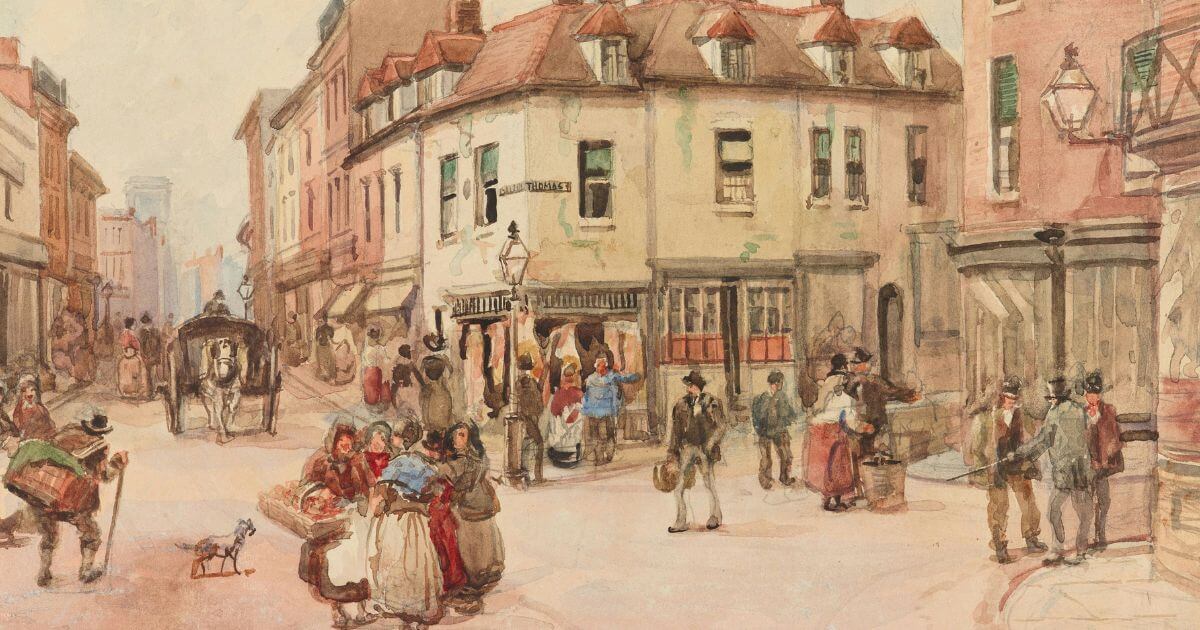
You do not need a weekend away to find history. Your neighbourhood - the streets you already know by muscle memory - holds discoveries that feel more surprising than another famous cathedral, precisely because you thought you had already seen everything. These ten prompts are designed for a few evenings after work or a Saturday morning loop. No special access required. Curiosity and a phone will do.
1. A vanished street or court
Compare a historical map with today's plan. Look for courts, yards, and alleys that have disappeared under later buildings or car parks. Walk to the former entrance. Often a gap, a change in brick, or a surviving nameplate remains. Standing where a dense community once lived - and seeing only open asphalt - is one of the sharpest local history lessons available.
2. A building that changed job three times
Pick a prominent corner building and reconstruct its career. Bank to bar. Chapel to flats. Cinema to supermarket. Trade directories, old photographs, and foundation stones help. The discovery is not only what it is now, but how many economic lives one structure can hold. Neighbourhoods reveal themselves through reuse.
3. A ghost sign
Look up. Painted advertisements survive on side walls and upper storeys long after the businesses closed. A tea dealer, a tailor, a long-gone newspaper - each sign is a commercial fossil. Photograph it, note the address, and see whether the firm appears in directories. You have found advertising history still attached to the street.
4. A boundary that still matters
Parish boundaries, manor edges, and old borough lines often survive as kinks in roads, changes in street furniture, or sudden shifts in architecture. Walk along a suspected boundary. Notice where paving styles change or where one side of the road feels older than the other. Administrative history sounds dry until you can feel it underfoot.
5. An industrial footprint in a "quiet" area
Many residential neighbourhoods sit on former industry: mills, gasworks, tanneries, brickfields, railway sidings. Clues include warehouse conversions, unexplained walls, street names, and oddly wide roads built for carts and trucks. Finding the industrial layer explains why houses face the way they do and why certain plots stayed open as yards.
6. A wartime trace
Look for filled-in air-raid shelter signs, shrapnel scars on masonry, replacement brickwork in a run of older façades, memorial plaques in churches and schools, and gaps where bombs removed buildings. Local newspapers and bomb-damage maps turn these traces into specific nights and addresses. The Second World War is not only a national story; it is a street-by-street one.
7. A watercourse you can no longer see
Culverted rivers and streams still organise neighbourhoods. Follow a dip in the land, a line of older bridges, or street names that mention mills, fords, and brooks. Historical maps confirm the water. Once you know where it ran, the logic of flooding, industry, and street layout becomes obvious. The discovery is geological as much as historical.
8. A place of gathering that lost its crowd
Former markets, fairgrounds, recreation grounds, dance halls, and football pitches leave subtle marks: wider spaces, surviving gates, memorial benches, or a pub that still hosts match days for a team that moved. Ask older residents where people used to gather. Social history hides in places that are now merely "open".
9. A religious landscape beyond the parish church
Chapels, mission halls, synagogues, mosques, meeting houses, and Sunday schools map migration and belief. Some are still active; others are converted. Counting them within a twenty-minute walk often surprises people who assumed their area had "one church". The neighbourhood's spiritual history is usually plural.
10. A story pinned to the exact pavement under your feet
The final discovery is methodological: stop treating history as somewhere else. Stand still on an ordinary corner and ask what happened here. Then check. Archives, local societies, and location tools can answer with events tied to that coordinate - a fire, a strike meeting, a royal visit, a forgotten crime, a celebration.
LocoPast is especially useful for this tenth habit. Open the app on your street and scan nearby pins instead of searching for distant attractions. Midway through a familiar walk, you may find a story attached to a building you have passed for years. Try it at home first, then compare with a denser historic area such as Tower of London surroundings, or browse York Minster to see how neighbourhood-scale discovery feels when the layers are thick.
How to turn the list into a weekend project
Do not attempt all ten in one heroic day. Pair them:
- Saturday morning: vanished street + ghost sign + building career
- Sunday afternoon: boundary walk + watercourse + industrial footprint
- One evening: wartime traces via maps and a short loop
- Another evening: gathering places and religious buildings with a local history society tip
- Ongoing: the pavement question, repeated whenever you wait for a bus
Keep a simple notebook or notes app with address, discovery type, and one source. After ten finds, you will have a personal neighbourhood guide that no national list contains.
What makes a discovery "amazing"?
Amazement here is not about scale. It is about recognition. The moment you realise the park was a brickfield, or the flats were a chapel, or the car park was a court of houses, your mental map updates permanently. You cannot unsee it. That is the pleasure of local history: it upgrades the place you already inhabit.
Share one discovery with a neighbour. Local history spreads well in conversation. Someone will add a detail you missed - a family who lived in the court, a shop that stood where the ghost sign still advertises tea. Your ten discoveries become twenty.
A note on care
Some neighbourhood discoveries involve poverty, clearance, discrimination, or violence. Treat them with respect. Photograph ruins and scars thoughtfully. If a site is a private home or an active place of worship, observe from public space. Curiosity should not become intrusion.
Start with number ten tonight
Stand outside. Open a map or LocoPast. Find one story within five minutes' walk that you did not already know. That single discovery is enough to prove the point: history is not only in destinations. It is distributed across the neighbourhood you thought you had finished exploring.