Some places refuse to settle into a neat story. You can read the guidebooks, stand on the viewing platforms, and still feel the gap between what we know and what the landscape seems to ask. These twelve sites are not folklore parks. They are real historic places where archaeology, oral tradition, and unfinished research meet. Visit them for the atmosphere, but stay for the questions.
1. Stonehenge, Wiltshire
England's most famous prehistoric monument looks simple from a distance: upright stones, lintels, chalk downs. Up close, the engineering still startles. Bluestones were brought from the Preseli Hills in Wales; the larger sarsens were shaped and raised with a precision that challenges easy assumptions about Neolithic life. Alignments with the summer solstice sunrise are well known, yet the full ceremonial purpose remains debated. The surrounding landscape of barrows, avenues, and timber circles suggests Stonehenge was part of a much wider ritual geography.
2. Göbekli Tepe, south-eastern Turkey
Often called the world's oldest known monumental temple complex, Göbekli Tepe upended timelines. Massive T-shaped pillars, carved with animals, were erected by communities that appear to have been hunter-gatherers rather than settled farmers. That sequence unsettles older models of civilisation. Who organised the labour? Why was the site later deliberately buried? The hilltop still feels unfinished as an explanation, which is precisely why it draws so many visitors.
3. The Nazca Lines, Peru
From the air, the Nazca desert reveals geoglyphs of animals, plants, and geometric figures drawn into the gravel. On the ground, many are almost invisible. Their scale and survival in an arid climate are remarkable; their meaning is harder to pin down. Ritual pathways, astronomical markers, water-related ceremonies - each theory has advocates. What is certain is the skill required to design figures that only resolve from height, long before modern flight.
4. Rapa Nui (Easter Island)
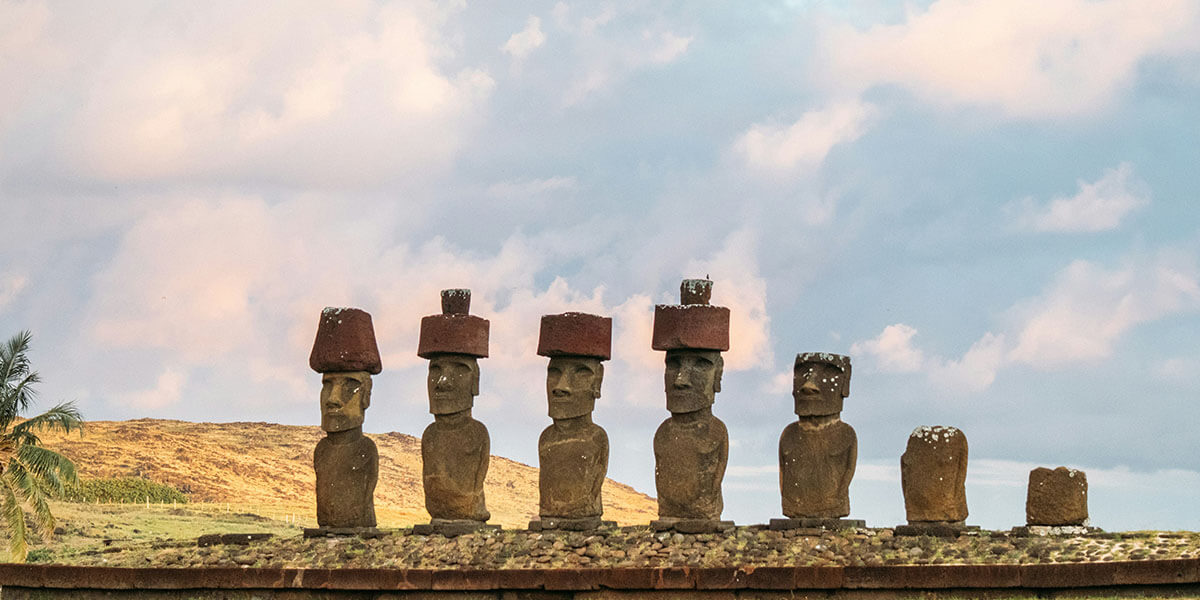
The moai statues staring inland from their platforms are among the most recognisable images in world archaeology. Less familiar is the story of how a remote Polynesian society organised stone carving, transport, and ceremonial life across a fragile island environment. Collapsed statues, unfinished quarries at Rano Raraku, and contested narratives of ecological and social change keep the island in the realm of mystery without needing invented myths.
5. The Great Sphinx of Giza, Egypt
Beside the pyramids, the Sphinx has watched the desert edge for millennia. Erosion patterns, restoration campaigns, and arguments about its original form keep scholarly debate lively. Was it always a pharaoh's face? How much of the body was reshaped by later rulers? Standing before it, visitors often feel the force of deep time more than any single caption can hold. Mystery here is less about fantasy and more about incomplete evidence.
6. Machu Picchu, Peru
High above the Urubamba valley, Machu Picchu combines Inca stonework, agricultural terraces, and dramatic setting into one of the most visited historic sites on earth. Its exact role - royal estate, ceremonial centre, or both - is still discussed. The precision of the masonry, fitted without mortar, continues to impress engineers. Mist and mountains help the sense of discovery, even on a busy trail day.
7. Derinkuyu Underground City, Cappadocia
Beneath the soft rock of Cappadocia lies a multi-level underground city with living spaces, storage, stables, ventilation shafts, and heavy stone doors. Communities used such networks for shelter across centuries of conflict and insecurity. Walking the tunnels, you feel the ingenuity of people who treated the earth itself as architecture. How many similar complexes remain only partly explored is part of the region's lingering intrigue.
8. Nan Madol, Pohnpei
Off the shore of Pohnpei in Micronesia, Nan Madol is a ceremonial centre built on artificial islets of basalt columns set in a lagoon. The logistics of moving and stacking the stone are formidable. Oral histories and archaeology together sketch a powerful chiefly culture, yet much about daily life in this "city of canals" remains fragmentary. Few world sites feel so improbable when you first see them.
9. Newgrange, County Meath
Older than many Mediterranean monuments, Newgrange is a passage tomb whose chamber lights up at the winter solstice sunrise. The carved kerbstones, the corbelled roof, and the careful orientation show a society with sophisticated astronomical and architectural knowledge. Why these tombs were built at such scale, and how they related to surrounding monuments in the Boyne Valley, still invites interpretation beyond simple burial.
10. Yonaguni, Japan
Off Yonaguni Island, divers explore a submerged rock formation with steps, terraces, and right angles that some interpret as a man-made structure, and others as unusual geology shaped by tectonic forces and erosion. The debate itself is the point: it shows how badly we want clear stories, and how carefully evidence must be weighed. Whether cultural heritage or natural wonder, the site forces humility about what lies under the sea.
11. Sacsayhuamán, Cusco
Above Cusco, zigzagging walls of enormous interlocking stones form one of the most striking Inca constructions. The fit of the blocks is so tight that visitors routinely run a finger along the joints in disbelief. Earthquakes have tested the masonry for centuries. How the stones were quarried, moved, and set with such accuracy remains a favourite topic among guides - and a useful reminder that "mystery" can mean unfinished technical history rather than magic.
12. The Plain of Jars, Laos
Scattered across the Xiangkhouang Plateau are thousands of large stone jars, some clustered in groups, their original purpose still debated. Burial-related theories are strong, yet the full cultural context is incomplete, partly because conflict damaged research for decades. Standing among the jars, with hills stretching away, you encounter a monumental landscape that tourism has only recently begun to open carefully again.
Mystery as a way of travelling
What links these places is not a shared secret society or a single lost civilisation. It is the productive gap between evidence and meaning. Good travel treats that gap with respect. Read site interpretations, listen to local guides, and notice when claims outrun the archaeology. Wonder thrives best when it stays honest.
LocoPast can sharpen the same habit closer to home. Mystery is not only a long-haul destination. Britain is dense with enigmatic monuments, contested battlefields, and folklore pinned to real coordinates. Midway through planning a bigger trip, it helps to practise curiosity on familiar ground - open the map around Stonehenge, then compare with a layered urban anchor such as Tower of London surroundings, where documented history and lingering legend sit side by side.
How to visit mysterious sites well
- Arrive with one question, not twenty slogans from social media.
- Prefer official paths, local museums, and trained guides over dramatic speculation.
- Photograph details - tool marks, alignments, inscriptions - as well as wide views.
- Note what is known, what is debated, and what is simply unknown.
- Leave fragile surfaces and underwater sites undisturbed.
Mystery fades fastest when sites are damaged. It deepens when travellers treat unfinished research as an invitation to learn, not a licence to invent.
Bringing the questions home
After a trip, keep a short list of what still puzzled you. Look up excavation reports, museum collections, or local historical societies. The best mysterious history spots do not close the book. They teach you how to keep reading the landscape - whether that landscape is a lagoon city in the Pacific or a chalk down in Wiltshire within reach of a weekend train.