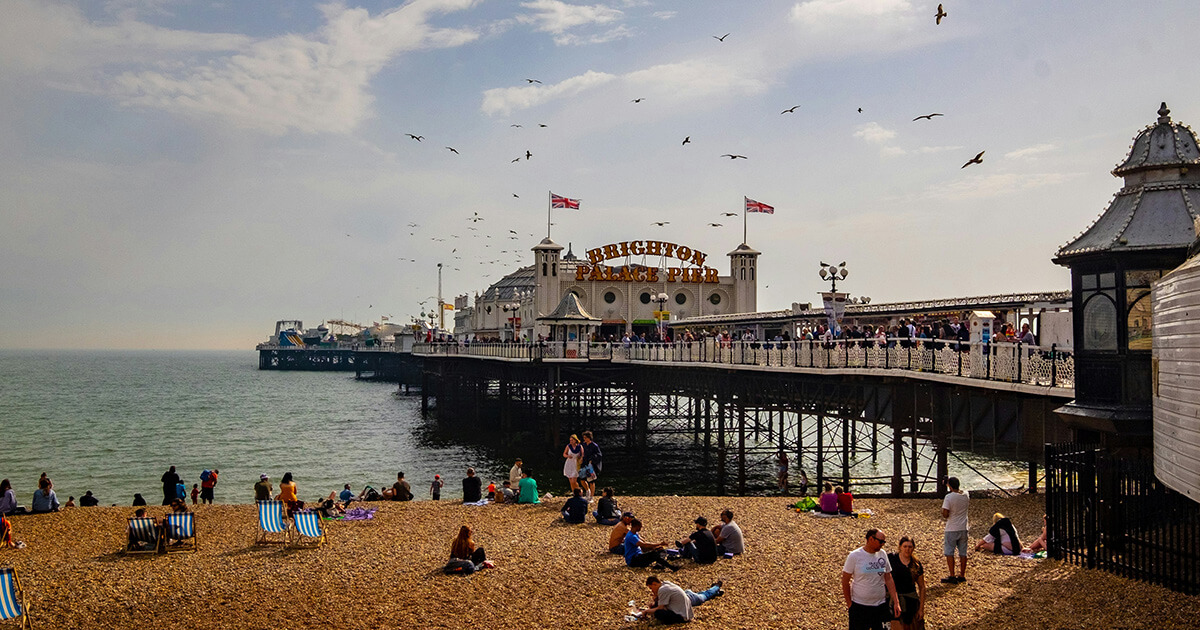
Brighton is one of Britain's iconic seaside towns, famous for pebble beach, pier lights, and weekend energy. Underneath the resort sits an older fishing settlement, a royal playground, and a laboratory of Victorian leisure engineering. This list is part of our series on historically significant sites beside classic British seaside places - fifteen landmarks that repay more than a selfie stop.
1. The Royal Pavilion
The Royal Pavilion is Brighton's unavoidable masterpiece: John Nash's fantastical palace for the Prince Regent, later George IV. Onion domes, cast-iron palm columns, and Chinese-inspired interiors turned a coastal retreat into a statement of royal taste. Tour the State Rooms slowly; the building explains how Brighton leapt from Brighthelmstone village to fashionable resort.
2. Brighton Museum and Art Gallery (Pavilion estate)
Beside the Pavilion, the museum and art gallery in the former stables and riding school complex deepens the story with fashion, design, and local collections. It is the best place to understand how visitors, residents, and performers shaped the town beyond the palace fantasy.
3. The Lanes
The Lanes preserve the tight street pattern of the old fishing town. Twisting passages, low buildings, and sudden courtyards contrast with the grand east-west seafront. Jewellers and cafes occupy spaces that once housed net lofts and sailors' cottages. Getting mildly lost here is historically appropriate.
4. Brighton Fishing Museum and the beach community
Near the lower Lanes and seafront arches, the Brighton Fishing Museum keeps the working beach in view. Brighton's wealth began with seine nets and hobnail boots, not with boarding houses. Photographs and boats remind you that "seaside" meant livelihood long before it meant holiday.
5. Palace Pier
Palace Pier (often simply Brighton Pier) is the surviving pleasure pier: ironwork, amusements, and that classic walk over water. Opened at the end of the 19th century, it continues a Victorian idea - that the sea itself could be a stage for entertainment. Visit out of season if you want structure over crowds.
6. West Pier ruins
The West Pier skeleton offshore is one of England's most haunting seaside monuments. Fire, storms, and neglect reduced a once-elegant pier to a sculptural wreck. Viewing it from the shore or i360 area is a lesson in how fragile seaside architecture can be - and how ruins become landmarks in their own right.
7. British Airways i360 and the western seafront story
The i360 tower stands near the West Pier site. Whether you ride it or not, the location focuses attention on the western seafront's cycle of ambition, decay, and reinvention. Pair the view with a look at the pier remains for a single narrative of seaside risk and spectacle.
8. Volk's Electric Railway
Volk's Electric Railway along Madeira Drive is the oldest operating electric railway in the world still running. Magnus Volk's late-Victorian experiment moved visitors between Aquarium and Black Rock with quiet electric pride. Riding it is living industrial heritage, not nostalgia theatre.
9. Brighton Aquarium (Sea Life) site
The aquarium building near the Palace Pier entrance belongs to the same Victorian leisure boom. Even if you skip the modern attraction, the site marks how science display and popular entertainment fused on the Victorian waterfront.
10. Madeira Terrace and Drive
Madeira Terrace - the long cast-iron promenade along the cliff - is a masterpiece of seaside civic engineering, currently the subject of major restoration hopes and debates. Walk Madeira Drive beneath it and you feel the Victorian determination to turn chalk cliffs into a genteel parade. The scale still impresses when the paint is tired.
11. Regency squares: Bedford, Norfolk, Sussex
North of the front, Regency squares and crescents show the speculative building boom that followed royal patronage. Stucco facades, iron balconies, and planned gardens created an urban resort, not a village with beach huts. Bedford Square and neighbouring set pieces repay an hour of looking up.
12. The Chapel Royal and religious Brighton
The Chapel Royal on North Street and other town-centre places of worship map a growing population's spiritual needs. Brighton's story is often told as pleasure alone; chapels and churches record migration, Methodism, and fashionable Anglicanism sharing the same streets as assembly rooms.
13. Theatre Royal Brighton
The Theatre Royal has entertained Brighton since the early 19th century. Playbills and the auditorium tradition link resort culture to serious drama and touring stars. Seaside towns needed theatres as much as they needed bathing machines.
14. Preston Manor and inland Brighton
A short hop inland, Preston Manor offers a furnished house experience that balances the Pavilion's fantasy with gentry domestic life on Brighton's rural fringe. It is a useful reminder that the resort ate surrounding villages as it grew.
15. The Brighton and Hove seafront shelters and communal design
Do not overlook the smaller fabric: seafront shelters, lamp columns, and lavatory pavilions. These modest structures show municipal care for visitors of every class. Open LocoPast on the prom and you may find stories attached to shelters, slips, and storm events that never make the postcard rack.
Turning the fifteen into a walk
Morning: Pavilion and museum, then the Lanes and Fishing Museum. Midday: Palace Pier and Volk's Railway east along Madeira Drive. Afternoon: West Pier viewpoint, Regency squares, and a theatre or chapel pause on the way back to the station. Wear layers - the Channel wind ignores sunshine.
Brighton's fame can make it feel too familiar to "do" historically. This list is a nudge to look past the weekend brand. Wherever you stop along this iconic British seaside strip, open LocoPast to reveal historical stories pinned to your exact location. Fishermen, princes, and pier engineers all left marks on the map - often within sight of the same pebbles.