Some places wear their past lightly. Others stack centuries in plain sight: walls beside railways, temples beside tram lines, harbour warehouses turned into flats that still face the same tide. Historically rich does not only mean famous. It means density - the feeling that every few minutes of walking reveals another layer you can still touch.
This list mixes capitals everyone recognises with smaller cities and towns where history is no less intense for being quieter. Visit them for landmarks if you like, but stay for the streets between the monuments. That is usually where the richness lives.
1. Rome, Italy
Rome is the obvious starting point and still earns it. Republican forums, imperial ruins, medieval churches, Baroque piazzas, and a modern capital share the same basin. You can walk from a second-century bath complex to a twentieth-century boulevard without leaving a single neighbourhood's worth of narrative. The city's gift is continuity: people still live inside the argument between eras.
2. Istanbul, Turkey
Straddling Europe and Asia, Istanbul concentrates empires. Byzantine churches, Ottoman mosques, Genoese towers, and busy waterfront trade all press against the Bosphorus. The city's historical richness is not a museum quarter alone; it is the way ferry routes, markets, and hilltop viewpoints still organise daily life along older geographies of power and exchange.
3. Kyoto, Japan
Kyoto keeps a quieter chronology than many mega-capitals, which makes its depth easier to feel. Temples, gardens, wooden townhouse streets, and imperial associations sit within a basin ringed by hills. Seasonal rituals and neighbourhood craft traditions keep history social rather than purely monumental. Walk early, when lanes feel local before tour groups arrive.
4. Cairo, Egypt
Cairo's richness is overwhelming in the best sense: Islamic medieval quarters, Coptic sites, Ottoman houses, and the proximity of pharaonic landscapes just beyond the modern sprawl. The city's density of mosques, markets, and living heritage districts rewards slow exploration. Pair museum visits with walks through older neighbourhoods where stone and street pattern still negotiate with traffic and commerce.
5. Athens, Greece
Athens offers a rare vertical conversation: ancient citadel, classical agora, Roman additions, Ottoman traces, and a restless modern capital below. The Acropolis dominates the skyline, yet historical richness also lives in lesser-known hills, Byzantine churches, and neighbourhoods rebuilt after independence. Standing in the city centre, you sense how democracy, empire, and nationhood left physical marks within walking distance of each other.
6. Jerusalem
Few cities carry so many overlapping sacred and civic histories in such a compact area. Walls, quarters, pilgrimage routes, and contested memory make every gate and alley historically charged. Visitors need sensitivity and good pacing; the reward is an unmatched sense of how belief, trade, and politics can share - and contest - the same stones.
7. Cusco, Peru
High in the Andes, Cusco preserves Inca foundations beneath colonial streets and churches. Trapezoidal doorways, massive stone walls, and Spanish urban planning coexist in a way that makes conquest and continuity visible underfoot. Surrounding valleys and sacred landscapes extend the story beyond the historic centre. Altitude asks for a gentler first day; history asks for upward glances at every corner.
8. Edinburgh, Scotland
Edinburgh's Old and New Towns form a lesson in urban time. Medieval closes tumble down from the Castle Rock toward the New Town's Georgian order. Enlightenment institutions, literary associations, and volcanic geology sit beside one another. The city's richness is walkable and vertical - climb one wynd and the chronology shifts.
9. Fez, Morocco
The medina of Fez is one of the world's densest living historic cities. Workshops, mosques, madrasas, and residential lanes form a pedestrian maze that still functions as a productive centre rather than a frozen set. Historical richness here is sensory: dye pits, leather, woodwork, and call to prayer layered over medieval street logic.
10. Varanasi, India
Along the Ganges, Varanasi concentrates pilgrimage, cremation rites, scholarship, and continuous urban life in a way few places match. Ghats, temples, and narrow lanes make spiritual history inseparable from the everyday. The city's antiquity is debated in detail by scholars; its atmosphere of deep continuity is unmistakable to anyone who walks the waterfront at dawn.
11. Dubrovnik, Croatia
Behind famous walls lies a compact merchant republic story: maritime trade, fortification engineering, and a stone city planned for defence and display. Cruise crowds can flatten the experience; early mornings and shoulder seasons restore the sense of a city-state that punched above its size. Climb the walls for the plan; enter the streets for the texture.
12. York, England
York packs Roman walls, Viking streets, a great medieval minster, and Georgian townhouses into a walkable core. The city's richness is cumulative rather than singular. Alleys, gates, and the river combine into a textbook of English urban history without needing a capital's scale. It is an ideal place to practise reading layers on foot.
13. Xi'an, China
Once an imperial capital and eastern terminus of Silk Road networks, Xi'an still shows that role in its walls, Muslim Quarter, and proximity to the Terracotta Army landscape. The city's historical weight comes from being a hinge between China and wider Eurasian exchange. Modern avenues and ancient circuits share space in a way that rewards both museum days and street-level wandering.
14. Cartagena, Colombia
Caribbean fortifications, colonial plazas, and Afro-Caribbean cultural history give Cartagena a distinctive layered identity. The walled city is the postcard; the fuller story includes ports, trade, and the people who built and contested the place. Heat and humidity encourage a slower pace - historically appropriate for a city shaped by sea routes and defensive patience.
15. Kraków, Poland
Kraków's old town, Wawel hill, and Kazimierz district hold royal, civic, and Jewish histories in close conversation. Surviving fabric and museums make medieval and early modern Central Europe unusually readable. The city's richness includes painful twentieth-century memory as well as earlier splendour; honest walking acknowledges both.
16. Prague, Czechia
Prague's castle quarter, river crossings, and old town lanes preserve a Central European chronology that feels unusually intact. Gothic towers, Baroque churches, Jewish Quarter history, and later civic layers sit within a walkable bowl. The city's richness is both skyline and pavement: look up for towers, look down for street patterns that still organise movement around the Vltava.
17. Venice, Italy
Venice is a city built as infrastructure for trade and ceremony. Canals, campi, guild halls, and island churches make maritime republic history physical. Crowds concentrate on a few arteries; historical richness rewards early walks, quieter sestieri, and attention to how water shaped every plot. It is less a checklist of monuments than a single continuous historic machine still running in slow motion.
18. Arles, France
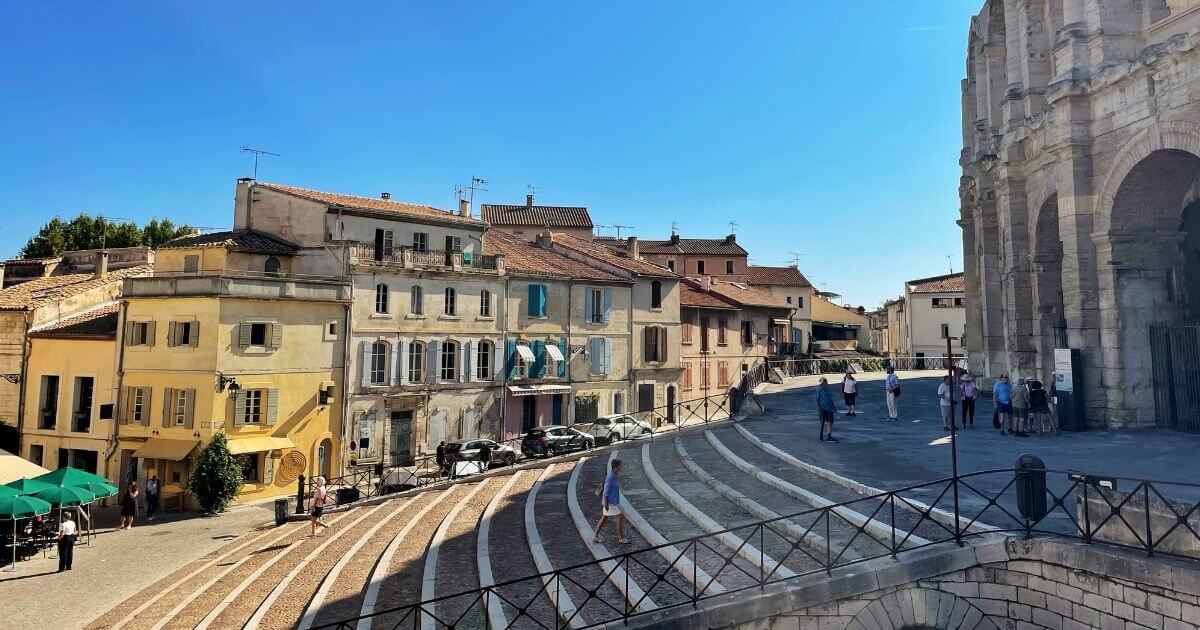
Arles proves that historical richness does not require capital scale. A Roman amphitheatre still anchors the town centre; nearby sit a theatre, baths, and the Alyscamps necropolis, where funerary avenues once marked the approach to the city. Medieval streets, Provençal light, and later artistic associations layer onto that classical core without erasing it. Walk from the arena into quieter lanes and you feel how a Rhône trading town kept reusing its own past. Arles is ideal when you want depth you can cover on foot in a day, then still find another corner that asks for tomorrow.
The useful test for any of these places is simple: how often do you stop because the street itself demands explanation?
That is where tools for location-based discovery help. Midway through planning a long-haul itinerary, practise the habit closer to home. Open LocoPast around a known anchor such as Tower of London, or browse a layered destination like Edinburgh Old Town, then notice how story density changes as you move one street away from the headline sight.
How to travel historically rich places well
Arrive with three themes, not thirty must-sees. Walk early and late. Use museums to deepen what the streets already suggested. Look for junctions - gates, bridges, market edges - where eras collide. Read plaques, but also read building lines, street widths, and the direction water used to flow.
Historically rich cities reward curiosity more than completionism. You will not finish Rome, Kyoto, or Fez. You can, however, leave with a clearer sense of how power, faith, trade, and ordinary life shaped the ground under your shoes. That is the real souvenir: a map in your head that still works when you travel next time.