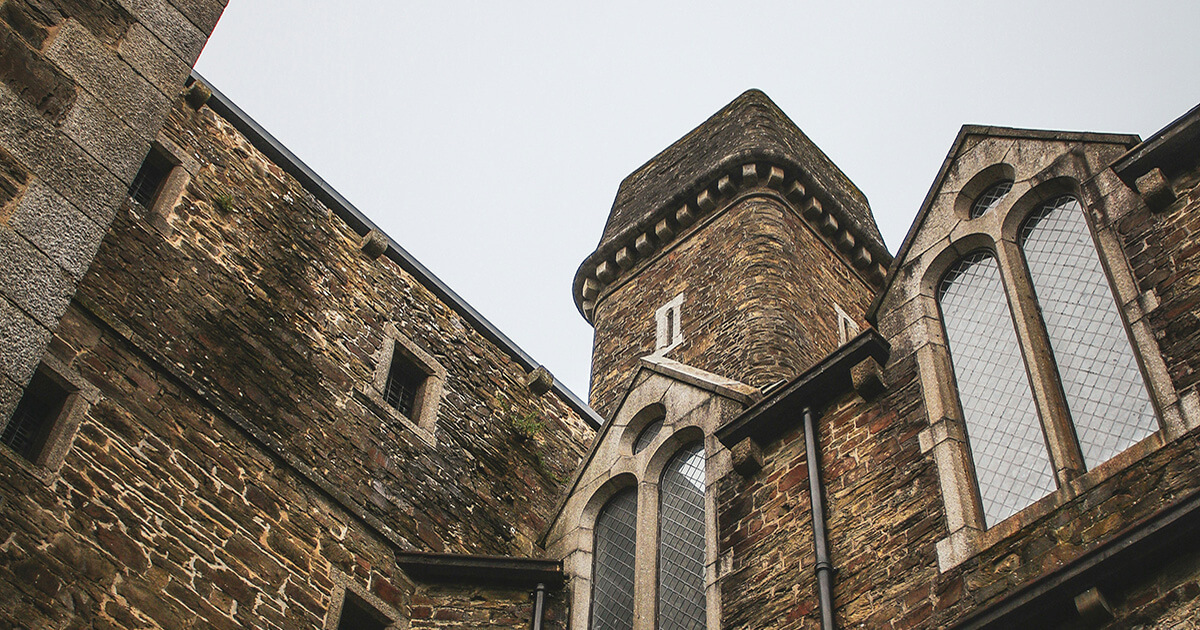
Bodmin sits inland on the edge of Bodmin Moor, once Cornwall's county town and still one of its most historically concentrated small centres. Assizes, a great parish church, a notorious jail, and a beacon hill all sit within a short radius. These twelve places take you through sacred, civic, criminal, and military chapters without pretending the town is only a stop on the way to the coast.
1. St Petroc's Church
St Petroc's is one of the largest parish churches in Cornwall, dedicated to the saint whose cult spread across the county. The tower and spacious nave speak of medieval wealth and pilgrimage. Inside, look for memorials that map Bodmin's civic families and military dead. The churchyard gives a quiet first orientation before you tackle the steeper streets.
2. Bodmin Jail
Bodmin Jail is the town's most visited landmark: a Georgian and Victorian prison complex that once held debtors, felons, and those awaiting the assizes. Exhibitions cover crime, punishment, and daily routine behind the walls. Go for the architecture as much as the atmosphere - thick granite, galleries, and yards designed for control. It is a stark reminder that Bodmin's importance was judicial as well as commercial.
3. Shire Hall and the old assize courts
The Shire Hall on Mount Folly housed Cornwall's courts when Bodmin was the county town. Assizes brought judges, lawyers, jurors, and spectators; inns and lodging houses thrived on court weeks. Standing outside, you can imagine the town swelling whenever the legal calendar arrived. Civic pride and legal theatre were part of the same stone frontage.
4. Mount Folly and the town centre plan
Mount Folly is more than a street name. It marks the administrative heart where courts, hotels, and public buildings clustered. Walk the surrounding grid and notice how Bodmin's centre feels purposeful rather than accidental - a planned civic core for a county that needed a meeting place inland from the ports.
5. Bodmin Beacon Local Nature Reserve
Climb Bodmin Beacon for the view that explains the town's strategic site. The 144-foot beacon monument commemorates Victorian civic ambition; the hill itself is older in meaning as a lookout over moor and river valleys. On a clear day you understand why an inland capital made sense before coastal railways reshaped Cornwall's geography of power.
6. The Bodmin and Wenford Railway
The Bodmin and Wenford Railway keeps steam and heritage diesel alive on former branch lines. Stations and locomotives are enjoyable in their own right, but historically they matter because the railway tied Bodmin to Wadebridge, Wenfordbridge china-clay traffic, and the wider Great Western network. Industry and excursion culture arrived on the same tracks.
7. Bodmin Town Museum and local collections
Small museums often hold what castles omit. Bodmin Town Museum (and related local displays in civic buildings when open) gathers domestic objects, photographs, and trade tools. Use them to humanise the jail and church: who baked, who enlisted, who ran the shops on Fore Street. Open LocoPast afterwards on the high street to match those everyday stories to coordinates.
8. The military town: barracks and wartime traces
Bodmin long hosted military barracks and training. Redcoats, volunteers, and later wartime units left drill halls, married quarters patterns, and memorials. Look for plaques and former military buildings on the town's fringes. Cornwall's strategic position in Atlantic wars made inland depots as important as coastal batteries.
9. Fore Street and market tradition
Fore Street remains the commercial spine. Market rights and shop frontages tell a quieter story than the jail, but they explain how people actually lived between assize weeks. Georgian and Victorian fronts, alleyways, and former inns reward a slow wander with eyes up at rooflines and down at cellar gratings.
10. Berry Tower and medieval remnants
Berry Tower, a surviving element associated with the town's medieval religious landscape, is an easy miss if you only chase the jail. Seek it out as a fragment of the older sacred geography around St Petroc's cult. Bodmin's holiness was famous in Cornish tradition long before tourism discovered the moor.
11. Lanhydrock (short hop from town)
A few miles south, Lanhydrock offers a Vicwardian country house experience with gardens and a long carriage drive - but its story includes Civil War damage to an earlier house and the rebuilding of a Cornish gentry seat. Pair it with Bodmin if you have a car or bike. The contrast between county-town granite and aristocratic parkland is part of Cornwall's social map.
12. Towards Bodmin Moor: Dozmary and the high ground
Finish by looking outward. Bodmin Moor begins almost at the town's shoulder: tors, mires, and prehistoric monuments. Dozmary Pool, steeped in Arthurian folklore, lies within easy reach. You do not need to believe every legend to feel how moorland myth and county administration shared the same hinterland. Prehistoric settlements and medieval tinning sites scatter the granite uplands beyond the last streetlamp.
A practical day list
Morning: St Petroc's, Shire Hall area, Fore Street. Midday: Bodmin Jail. Afternoon: Beacon climb, then railway or Lanhydrock depending on energy. Keep the moor for a second outing if you want walking boots and weather margin.
Bodmin is sometimes skipped for Padstow or the coastal A-roads. That is a gift for anyone who likes history with fewer crowds. Wherever you stop, open LocoPast to reveal historical stories pinned to your exact location. Saints, prisoners, and railwaymen all left marks on the map - often within a ten-minute walk of each other.