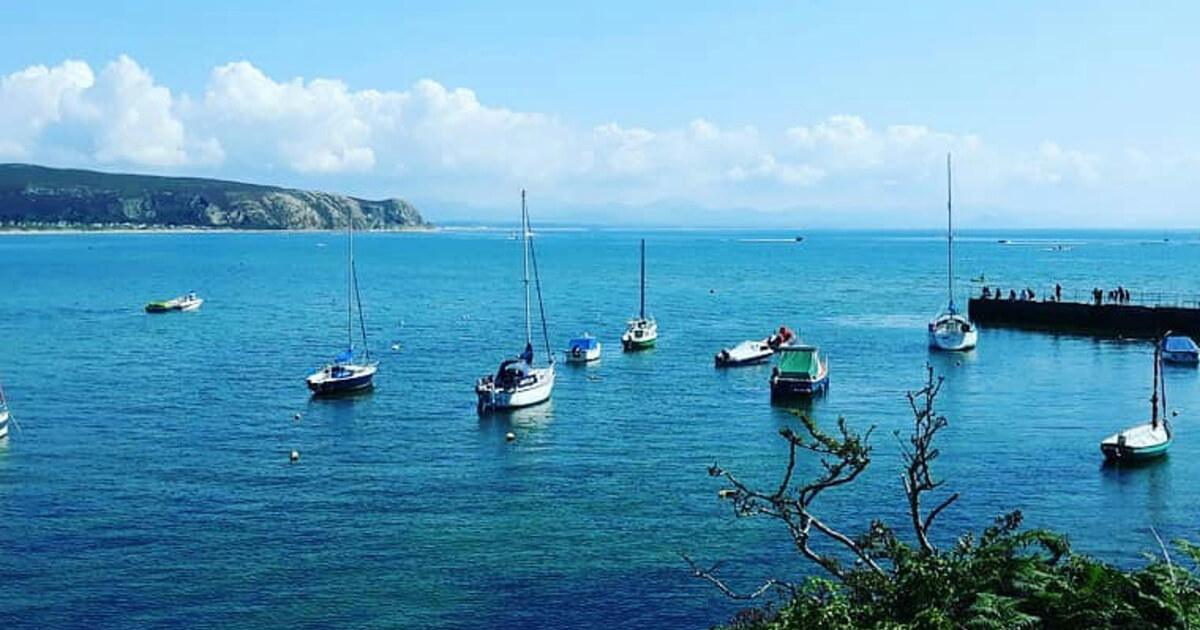
Abersoch sits on the south coast of the Llŷn Peninsula in north-west Wales, where Cardigan Bay weather meets Welsh-language village life and a harbour that still remembers fishing. It is famous now for sailing dinghies and summer buzz, yet the deeper story is quieter: chapels, farm lanes to the cliff, island saints, and a community that worked the bay long before holiday calendars arrived. In our series on historically significant sites near iconic British seaside towns, Abersoch is the Welsh chapter - proof that the British seaside is more than an English pier postcard.
Harbour village before the boom
Abersoch grew as a small port and fishing settlement at the mouth of the Soch. Look at the harbour on a grey Tuesday in spring and you can still see that older scale: working boats, mud at low tide, houses that face the water because the water paid. Tourism expanded the village dramatically in the 20th century, but it did not invent the shoreline instinct.
Walk the harbour wall without rushing. Notice how shelter, slipways, and the relationship to the open bay organise everything. Abersoch Harbour is modest compared with industrial ports; its history is intimate rather than imperial. That intimacy is historically precious.
Welsh faith: chapels and community memory
Like many Llŷn communities, Abersoch's social spine included Nonconformist chapels as well as older Anglican patterns in the wider district. Chapel culture shaped education, politics, music, and Sunday quiet. Even where buildings have changed use, their frontages and graveyards map a moral landscape that seaside branding rarely mentions.
Spend a moment at a chapel gate if you pass one. Names on stones, Welsh inscriptions, and the plain architecture of conviction tell you this coast's identity was never only leisure English. Language and faith are historical sites too - harder to photograph than a beach, easier to feel if you listen.
St Tudwal's Islands offshore
Offshore, St Tudwal's Islands carry early Christian and maritime associations. Island hermitages and later practical uses (including quarantine and farming chapters in wider local memory) make the bay feel storied rather than empty. From the coast path and beaches, the islands sit as constant company - a reminder that Welsh holiness often preferred edges and isolation.
You may not land on every visit. Looking is historically legitimate. Sailors and pilgrims both navigated by such silhouettes.
Porth Neigwl - Hell's Mouth - and the cliff line
West of Abersoch, Porth Neigwl, known in English as Hell's Mouth, opens as a wide bay with serious surf and a reputation for wrecks. The name is theatrical; the hazard was real. Standing on the cliff path above that curve of sand, you understand why local knowledge of wind and set of the sea mattered.
This is one of the Llŷn's great coastal statements: beauty with teeth. Pair it with Abersoch's relative shelter and the geography lesson writes itself. Iconic seaside towns often sit next to coasts that refuse to be cute. Hell's Mouth keeps Abersoch honest.
Farms, lanes, and the hinterland that fed the harbour
Behind the beach roads, farm lanes climb towards commons and smallholdings. Abersoch did not live on fish alone; the peninsula's agriculture and the harbour traded with each other. Stone walls, Welsh place-names, and scattered houses show a working landscape that summer traffic sometimes treats as scenery only.
If you have a bike or sturdy shoes, leave the waterfront for an hour. History thickens when you smell silage as well as salt.
Wartime and modern coastal change
The wider Llŷn saw wartime activity, training, and the nervous watching that came with Atlantic approaches. Memorials in nearby communities and occasional concrete traces belong to that century. Later decades brought caravan parks, sailing clubs, and second homes - a social history still debated in Welsh coastal politics. Understanding Abersoch means holding both the wooden boat and the planning argument in the same frame.
Open LocoPast on the harbour and coast path to find stories that stitch wrecks, chapels, and village events to exact points. Midway through a bright sailing afternoon, those pins can return you to a saltier century without spoiling the day.
How to visit with a listening ear
Morning harbour walk while the water is quiet. Coffee, then the coast path towards views of St Tudwal's. Afternoon at Hell's Mouth if the wind allows a cliff stroll, or a beach hour at Abersoch's own sands if you want softer edges. Evening: notice how Welsh and English mix in shop talk and how the village shrinks back towards itself when day visitors leave.
Abersoch is an iconic British seaside village with a Welsh heartbeat and island weather. Wherever you stop, open LocoPast to reveal historical stories pinned to your exact location. Fishermen, chapel congregations, and cliff-path walkers all left marks on the map - often within sight of the same bay.