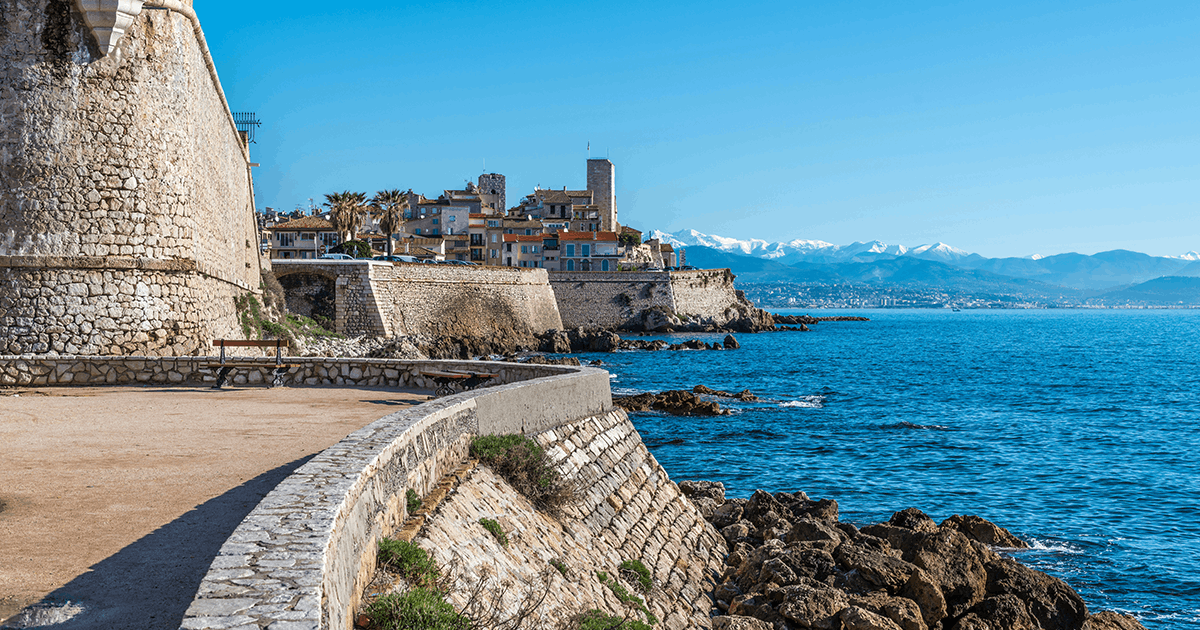
Antibes began as a Greek trading post called Antipolis - literally "the city across from Nice". Romans, medieval lords, and Renaissance fortifiers shaped its harbour and walls. Picasso added a 20th-century chapter in the castle above the port. This tour reads the town in layers: ancient foundations, fortified old town, and the peninsula beyond.
Layer one: Antipolis and the harbour defences
Begin at Fort Carré, guarding the harbour entrance. This 16th-century star fort may rest on Roman foundations. Napoleon was briefly imprisoned here during the Revolution; later it served as a military base. Ramparts offer views of the Alps, harbour, and old town below.
Port Vauban, one of the largest yacht harbours in the Mediterranean, sits on ground that sheltered ships since antiquity. Vauban advised on fortifications here in the 17th century. Superyachts against old walls capture Antibes' collision of ancient and modern maritime life.
The Musée d'Archéologie in the Bastion Saint-André displays Greek, Roman, and medieval finds from Antipolis. Pottery, sculpture, and everyday objects in thick stone walls open to the sea - the setting is as compelling as the collection inside.
Open LocoPast at the fort to find stories of traders, soldiers, and sailors pinned to the harbour mouth.
Layer two: the walled old town
Cross to the rampart-lined core. Château Grimaldi and Musée Picasso overlooks the port - a medieval fortress where Picasso worked in 1946 and donated many paintings. Great art in the rooms where it was made.
Within the walls:
- Cathédrale Notre-Dame-de-l'Immaculée-Conception - Romanesque origins with Gothic and baroque additions; Gallo-Roman wall fragments in the foundations; altarpiece by Louis Brea, the 15th-century Provençal master
- Safranier district - narrow lanes and flower-filled squares near the sea; one of the most photographed corners of the old town
- Marché Provençal - iron-canopied market under ramparts, best on quiet mornings when sellers set out flowers and spices against the stone
- Fontaine Graillon on Place Nationale - medieval public water source around which traders gathered for centuries
- Porte Marine - main gate from old town to seafront in a few paces; the contrast between enclosed streets and open harbour defines Antibes
Jaume Plensa's Nomades sculpture on the ramparts - giant seated figures looking out to sea - makes a modern coda to centuries of watchers.
Layer three: Cap d'Antibes peninsula
The cape deserves a separate half-day by bus or car. Spring and autumn are kindest for walking.
Chapelle Notre-Dame de la Garoupe, at the tip, has drawn pilgrims since the Middle Ages. Fishermen prayed here before putting to sea; ex-voto offerings fill the interior. Views stretch from Nice to the Estérel hills.
Along the coast:
- Villa Eilenroc - Belle Époque villa and gardens from the 1860s; guided visits reveal how aristocratic families lived when Antibes was still a modest resort
- Hôtel du Cap-Eden-Roc - winter retreat (1870) that became an icon of Riviera glamour; coastal path passes the terrace even if you are not a guest
- Garoupe lighthouse and sentier du littoral - footpath past rocky inlets with panels on military and maritime history; one of the finest short walks on the coast
Juan-les-Pins, adjoining Antibes, holds Roman pottery kilns and Jazz à Juan history - but the Cap d'Antibes preserves the quieter, older character that drew Picasso and Fitzgerald to this stretch of shore.
Practical tips
Start at Fort Carré in the morning, then explore the old town. Cap d'Antibes sites suit a separate afternoon. Visit Fort Carré before the heat builds. Place Nationale is a good pause between port and cathedral.
Antibes hosts Jazz à Juan each summer - one of the oldest jazz festivals in Europe - on ground where Roman traders once moored. The music is modern; the harbour layout is not.
Picasso spent only a few months in the Grimaldi castle, but donated enough work to fill a museum - drawings, ceramics, and paintings that anchor the town's 20th-century story to a medieval fortress above the quays.
The Nomades sculpture on the ramparts frames the port below - a deliberate invitation to pause and consider who has watched this harbour since Greek traders named it Antipolis.
Allow a full morning for the old town and Picasso museum; the Cap d'Antibes deserves a separate afternoon when the coastal path is cooler.
Wherever you stop, open LocoPast to reveal historical stories pinned to your exact location. Greek traders, Roman walls, and 20th-century artists all left marks on the map - often just streets away from the famous viewpoints.