The French Riviera is famous for beaches and glamour, but the Côte d'Azur has been a crossroads for two thousand years. Greeks, Romans, medieval lords, and modern artists all left traces you can still visit today, often within a short train ride of one another. This regional guide groups sites by area rather than a single ranked list - plan several days and travel slowly.
Nice to Antibes: Roman and fortified coast
The western stretch holds the coast's deepest antiquity and some of its finest fortifications.
Roman Nice: Above the city, Cimiez preserves amphitheatre, baths, and paved streets of the Roman town Cemenelum, with an archaeology museum beside the ruins. Vieux Nice below layers baroque churches, the Palais Lascaris, and cathedral of Sainte-Réparate over earlier settlements.
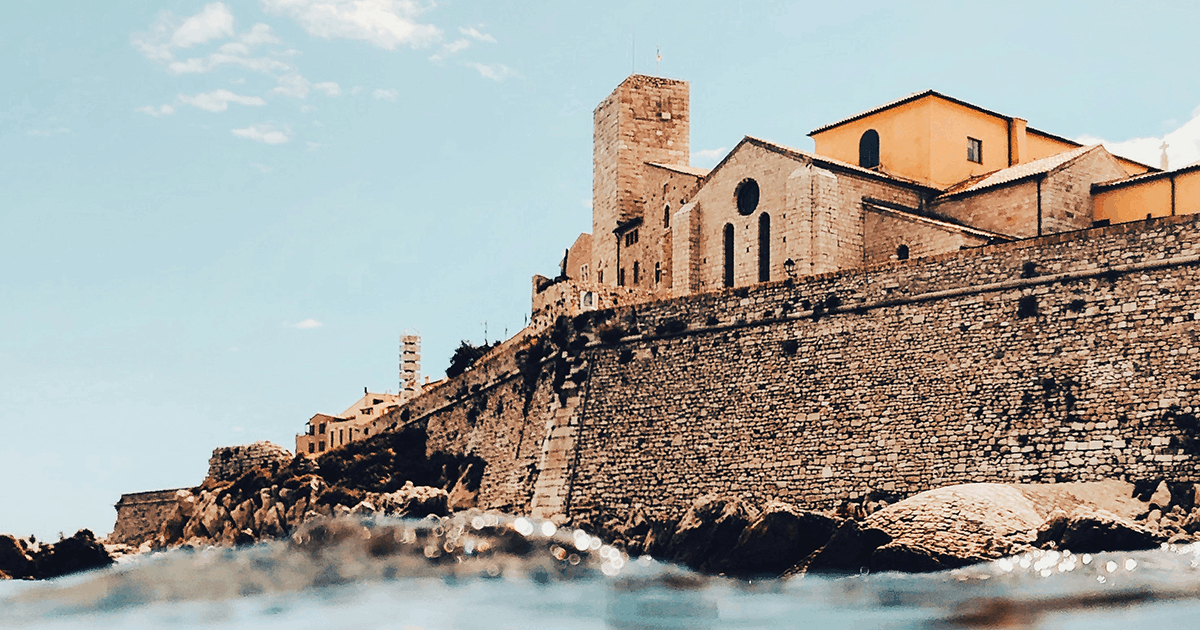
Antibes: Greek Antipolis became a Roman town; Fort Carré guards the harbour on foundations that may date to that era. The Château Grimaldi (Musée Picasso) is a medieval fortress where Picasso worked in 1946. Rampart-lined old town and Safranier district preserve village scale within the walls.
Open LocoPast at Cimiez or Fort Carré to find stories pinned to the ancient coastline.
Cannes and the offshore islands
Le Suquet in Cannes is the medieval hill above the port - climb to the Castre Museum in a former castle and Église Notre-Dame d'Espérance for views over the Croisette and islands.
Offshore, Lérins Abbey on Île Saint-Honorat has stood since the 5th century; monks still tend vineyards among ancient chapels. Fort Royal on Île Sainte-Marguerite imprisoned the Man in the Iron Mask. Boats run regularly from Cannes port.
Hill villages and artist towns
Inland and uphill, medieval planning survives better than on the busy shore.
- Èze - fortified village 400 metres above the sea; 12th-century castle ruins and Jardin Exotique framing the coast from Italy to Saint-Tropez
- Saint-Paul-de-Vence - ramparts encircling a village barely changed since the 16th century; artists from Chagall to Matisse were drawn here; Fondation Maeght nearby
- Villefranche-sur-Mer - deep harbour sheltered since antiquity; 16th-century citadel and Cocteau's Chapelle Saint-Pierre on the old port
Arrive early at Èze and Saint-Paul to avoid coach crowds.
East: Menton, Monaco, and Roman Provence
Near the Italian border, history turns distinctly regional.
Menton climbs from sea to Basilique Saint-Michel; Cocteau murals in the town hall wedding room link the 20th century to this border town. Menton was Italian until 1860; the architecture and dialect still carry that memory.
Fréjus, inland from the resort coast, preserves Roman amphitheatre, theatre, aqueduct, and Porte d'Orée - a naval base once launched fleets across the Mediterranean. Few visitors expect this depth of antiquity so close to the beach towns.
Above Monaco, the Trophy of Augustus at La Turbie commemorates victory over Alpine tribes in 6 BC. Reconstructed fragments still tower over the village; the climb rewards with views across Monaco to Italy.
The Prince's Palace on the Rock guards the harbour since the 13th century. State rooms open seasonally; the changing of the guard and walk around the palace square cost nothing. Château de Roquebrune-Cap-Martin is among the oldest fortifications on the coast; olive trees in the village are said to be over a thousand years old.
Belle Époque and later layers
Not all Riviera history is medieval. Villa Ephrussi de Rothschild at Saint-Jean-Cap-Ferrat, built on a former monastery site in the early 1900s, captures the moment when aristocracy made the coast a playground. Nine themed gardens overlook the cape; the villa shows how Belle Époque taste layered over older religious and agricultural landscapes.
Consider pairing coastal train travel with one hill village per day - the contrast between sea level ports and perched stone villages is the Riviera's defining historical geography.
Villefranche-sur-Mer deserves mention alongside the hill towns: its deep harbour sheltered fleets since antiquity, and the 16th-century citadel now holds museums and gardens above Cocteau's painted chapel on the old port.
Getting around
The coast is well served by TER trains between Nice, Antibes, Cannes, and Menton. Hill villages like Èze and Saint-Paul-de-Vence are easier by bus or car. A Zou! pass covers most regional buses if you plan several days of village hopping. Spread the journey across several days - heat and summer traffic reward a slower pace.
Wherever you stop, open LocoPast to reveal historical stories pinned to your exact location. Roman harbours, medieval sieges, and artistic exiles all left marks on the map - often just streets away from the famous viewpoints. Start exploring at Roman Cimiez above Nice and follow the coast east.