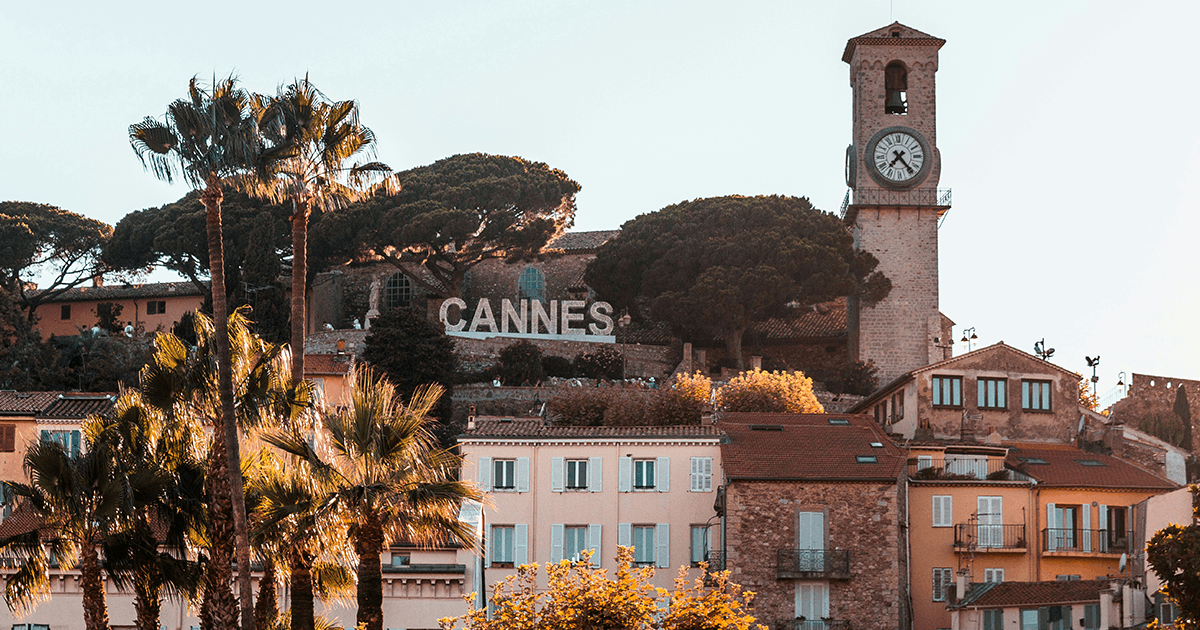
Cannes is synonymous with cinema and the Croisette, but long before red carpets it was a modest fishing village on a hill. Medieval lords built a castle above the bay; monks settled on offshore islands; and 19th-century aristocrats turned the sandy shore into a winter retreat. Historical Cannes splits naturally into two parts: the hill above the port, and the islands offshore.
Part one: Le Suquet and the old port
The medieval hill above the harbour is the oldest part of Cannes. Winding lanes climb past stone houses to viewpoints over the bay and the Lérins Islands - the entire town for centuries before the Croisette spread east.
At the summit:
- Musée de la Castre and Tour du Suquet - medieval castle once held by Lérins monks; panoramic tower and collections from Provençal archaeology to Pacific expeditions. The thick walls and narrow windows tell you this was built for defence, not display
- Église Notre-Dame d'Espérance - Gothic church begun in the 16th century; terrace frames views of port, Croisette, and islands in a single sweep
Le Suquet was the entire town for centuries. The Croisette below is reclaimed land - the shoreline moved east as Cannes grew rich on winter tourism.
Descend to Marché Forville at the foot of the hill - a covered market feeding Cannes since the 1930s on a site that traded long before. Rue Meynadier preserves 19th-century scale before grand hotels arrived.
The Vieux Port still holds fishing boats alongside superyachts. Église Saint-Georges (17th century) served the growing town below Le Suquet. Chapelle Bellini, hidden on a hillside, holds 19th-century frescoes - quiet and rarely crowded.
Open LocoPast on Le Suquet to find stories of monks, fishermen, and the village that became a global name.
Part two: the Lérins Islands
Boats run regularly from the quay to two islands that hold much of Cannes' deepest history.
Île Saint-Honorat
A fifteen-minute ride brings you to a Cistercian abbey founded in the 5th century. Monks still live and work here, tending vineyards and ancient chapels. The silence, pine scent, and open sea make it one of the most peaceful historical experiences on the Riviera.
Île Sainte-Marguerite
The larger island holds the Fort Royal, built by the Spanish and later strengthened by the French. It served as a state prison; the most famous inmate was the Man in the Iron Mask. The Musée de la Mer inside covers underwater archaeology and Mediterranean maritime history alongside the prison past.
Allow a full day for both islands, or choose one and explore thoroughly. Sainte-Marguerite's forest trails and quiet coves contrast with the monastic quiet of Saint-Honorat - together they explain why monks and soldiers both valued these rocks within sight of the mainland.
Belle Époque Cannes
The 19th and early 20th centuries transformed the shore when Lord Brougham's winter visit in the 1830s encouraged aristocrats to follow. Hotels replaced olive groves along the sand. Notable sites along and near the Croisette:
- La Malmaison - Belle Époque villa (1863) converted to an art centre; once owned by the Grand Duchess Anastasia of Russia
- Villa Domergue on the Collines de l'Estérel - 1930s villa and garden overlooking the bay
- Hôtel Carlton (1912) - domes and façade that define the Riviera's golden age
- Palais des Festivals - modern cinema history on ground that drew visitors since the 19th century; the famous steps sit where aristocratic hotels once faced the bay
The Sentier du Roy coastal path links Cannes to Antibes along the shore - a longer walk for those who want to connect hill-town history with the fortified coast by foot rather than train.
Practical tips
Begin with Le Suquet in the morning, then descend to the market and old port. Islands need a separate day - check boat times and last returns. Le Suquet at dusk, when harbour lights glow, rewards those who stay after the day trippers leave.
The Film Festival each May is modern history in real time - but the hill above the port reminds you how small Cannes was when monks looked down from the Castre tower at fishing boats alone in the bay.
Île Sainte-Marguerite forest trails lead away from the fort crowds - a quieter way to experience the island after you have seen the cells where the Iron Mask was held.
Wherever you stop, open LocoPast to reveal historical stories pinned to your exact location. Medieval monks, masked prisoners, and film legends all left marks on the map - often just streets away from the famous viewpoints.