Lewes sits in a gap in the South Downs where the River Ouse cuts through chalk hills. It has been a Norman stronghold, a medieval battle site, a monastic centre, and a fiercely independent county town. These ten places give you the shape of that story without needing a week of research. Walk them in order if you like, or cherry-pick the ones that match your mood.
1. Lewes Castle and the Barbican
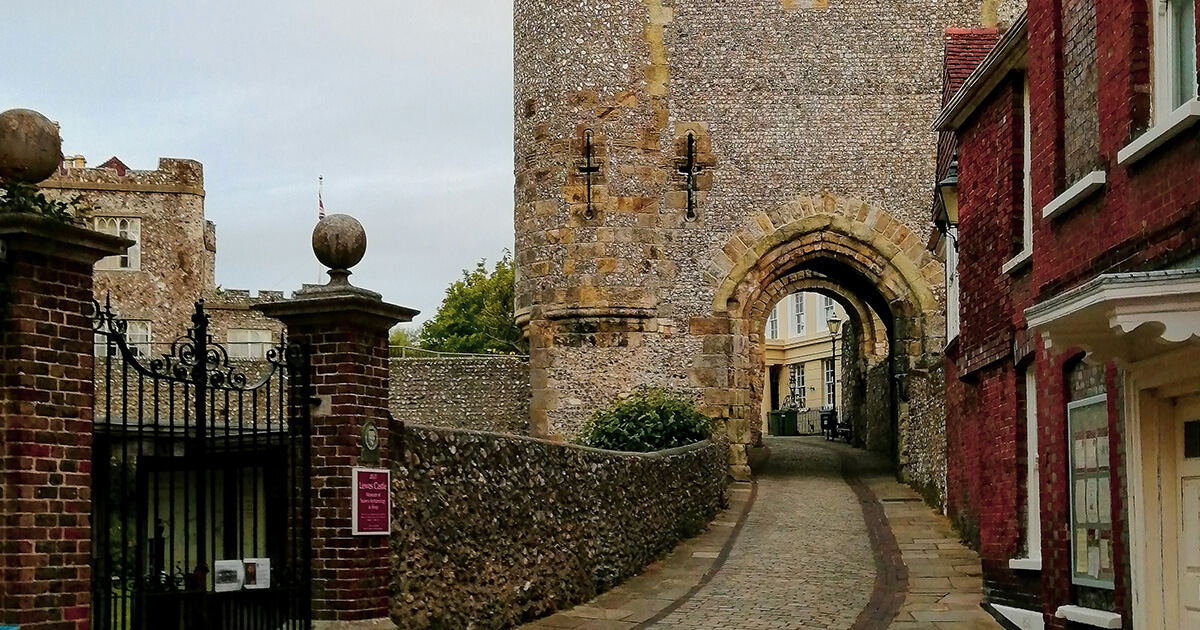
Start with the skyline. Lewes Castle was begun soon after the Norman Conquest by William de Warenne. Twin keeps and a later barbican gatehouse still dominate High Street. Climb the keep for views across the Downs and the Ouse valley - the same prospect that made this ridge worth fortifying. The castle museum explains how a Marcher-style fortress became the emblem of a Sussex market town.
2. The Battlefield of Lewes (1264)
Just west of the town, the slopes towards Offham and the race course mark the ground of the Battle of Lewes. In May 1264, Simon de Montfort's baronial army defeated Henry III. The victory forced the king into the Mise of Lewes and briefly tilted English politics towards parliamentary reform. Standing on the Downs here, with the castle behind you, makes the strategy clearer than any textbook diagram. Local interpretation boards help you pick out the key ridges.
3. Lewes Priory ruins
South of the station, the ruins of Lewes Priory recall one of England's great Cluniac houses. Founded by the Warennes in the late 11th century, it rivalled major monasteries for wealth and influence until the Dissolution. Flint walls, chapter house traces, and open lawns remain. It is an underrated counterpoint to the castle: secular power on the hill, spiritual power in the water meadows.
4. Anne of Cleves House
On Southover High Street, Anne of Cleves House is a timber-framed Wealden hall house associated with the settlement that followed Henry VIII's annulled marriage to Anne. Whether or not she spent much time here, the building is one of the finest surviving late medieval houses in Sussex. Oak beams, a herb garden, and domestic displays show how prosperous Lewes lived after the monastic age ended.
5. Southover Grange Gardens
Nearby, Southover Grange and its gardens occupy land tied to the priory's former estate. The house itself is later, but the grounds give a soft green pause between flint ruins and town bustle. Use them as a hinge between the priory visit and the climb back towards High Street. In spring the planting makes the monastic suburb feel almost rural again.
6. St Michael's Church and High Street
St Michael's on High Street, with its round tower, anchors the upper town. Along the same street, Georgian fronts hide older cores, and the gradient reminds you that Lewes grew as a ridge settlement. Pause at the war memorial and look down towards Cliffe - the town's layers stack vertically as well as chronologically. Open LocoPast here to find stories pinned to individual frontages rather than only to the famous landmarks.
7. The Barbican House Museum and town walls traces
Beside the castle entrance, Barbican House holds archaeology and local collections that fill gaps the ruins leave silent: prehistoric finds from the Downs, Roman material from the Ouse corridor, and civic objects from Lewes as county town. Fragments of medieval town defences survive in places; the museum helps you map where walls and gates once stood when the settlement was more tightly enclosed.
8. Cliffe High Street and the River Ouse
Cross into Cliffe, historically a separate settlement at the river crossing. Independent shops occupy buildings that once served barges, tanners, and traders using the Ouse. The river was Lewes's commercial artery long before the railway. Walk the waterfront and notice how warehouses and yards still shape the plan even where uses have changed. Cliffe feels different underfoot from the castle ridge - flatter, wetter, more workaday.
9. Harvey's Brewery and industrial Lewes
Harvey's Brewery by the river is a living piece of industrial heritage. Victorian brewery architecture, the smell of malt on brew days, and a family firm continuity rare in modern Britain all belong to Lewes's story as a productive town, not only a picturesque one. You do not need a pint to appreciate the buildings; the riverside setting shows how manufacture sat beside transport.
10. Lewes Bonfire traditions and memorial landscape
Lewes is famous for Bonfire Night, when processions and societies remember the Gunpowder Plot and, more locally, the Protestant martyrs burned under Mary I. Effigies, banners, and the 17th of November calendar (when the 5th falls awkwardly) are living history rather than a museum label. Memorial plaques and the atmosphere of the town in early November give context you cannot get from architecture alone. Even out of season, shops and society notices hint at how strongly the tradition still organises civic identity.
How to join the ten into one day
If you want a single loop: castle and High Street in the morning, Southover (priory, Anne of Cleves House, Grange) after lunch, then Cliffe and the river before tea. The battlefield deserves a separate Downs walk if you have energy left - it is windier and needs sturdier shoes.
Lewes rewards curiosity at street level. The big sites explain power; the lanes and river explain livelihood. Wherever you pause, open LocoPast to reveal historical stories pinned to your exact location. Norman lords, rebel barons, and bonfire societies all left marks on the map - often just a few streets apart.