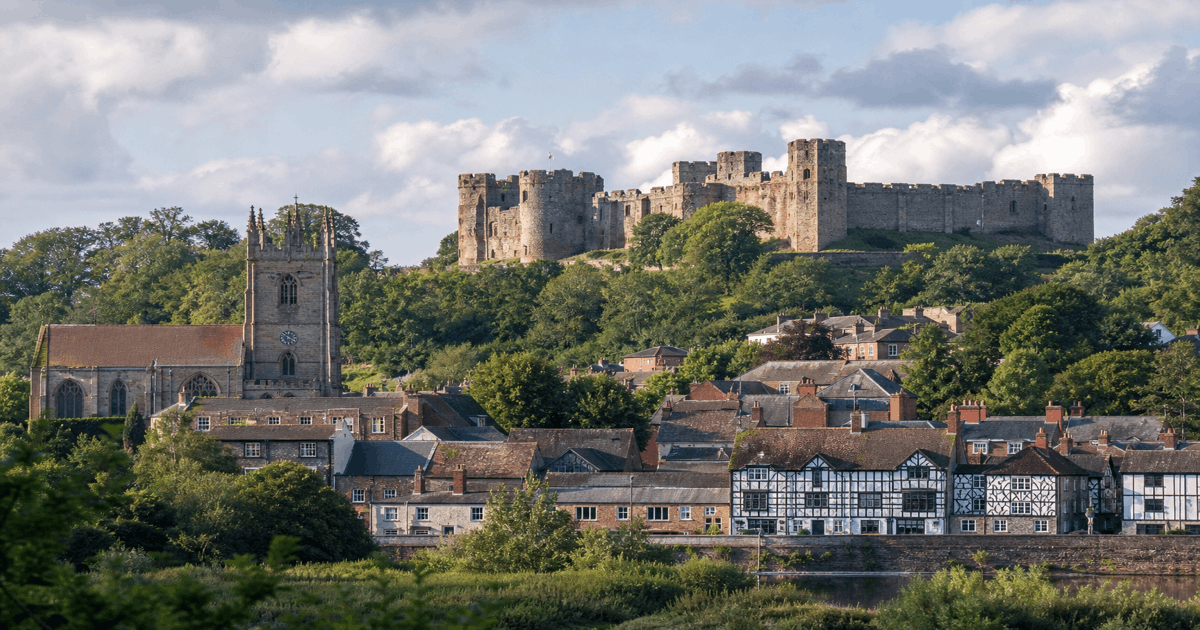
Ludlow sits on a cliff above the River Teme in south Shropshire, close to the Welsh border. Norman lords built a great castle here; the town grew rich on wool and became a powerhouse of the Wars of the Roses. Tudor kings held court at the fortress; Georgian gentlemen rebuilt the streets in brick and stone. Most visitors come for the castle - but the market town below is equally rewarding.
Ludlow Castle: Marcher fortress and Tudor court
Ludlow Castle dominated the Welsh Marches for centuries. Founded around 1086, it served as the administrative centre for the Council of the Marches under the Tudors - a regional government that ruled much of Wales and the border counties from this single hilltop.
Prince Arthur, Henry VII's eldest son and heir to the throne, died here in 1502. His death altered the course of English history: his younger brother Henry eventually succeeded as Henry VIII. The castle ruins still occupy the hill above the town, with bailey, towers, and views across the Teme valley.
Open LocoPast on the castle walls to find stories of sieges, royal councils, and border warfare pinned to the stonework. Allow at least ninety minutes for a proper visit.
St Laurence's and the market square
Below the castle, St Laurence's Church is one of the largest parish churches in England - a testament to Ludlow's medieval wealth. Perpendicular tower, stained glass, and the Palmers' Guild chapel fill the interior. Climb the tower for panoramic views over Ludlow Castle, the market square, and surrounding hills.
The market square has traded since the 12th century. Markets still run twice weekly. Broad Gate, the last surviving town gate, is a timber-framed passage where shops now occupy the lower floors. The Buttercross marked the dairy market; the present structure is largely Victorian, but the site has served traders for centuries.
Timber frames and Georgian Ludlow
Ludlow preserves dozens of medieval and Tudor buildings. The Feathers Hotel on Bull Ring (1619) is the most famous: a timber-framed facade studded with carved motifs, built during a period when Ludlow wool was valued across Europe.
The town publishes a Timber Framed Trail linking highlights including the Reader's House on Church Street and properties on Corve Street. Many facades hide behind Georgian brick fronts; look up to spot jettying, carvings, and original rooflines.
Castle Square links the market to the castle entrance. Dinham, the suburb below the cliff, grew as craftsmen settled near the fortress - Georgian houses line lanes that still feel like a separate village under the walls.
River, museum, and views beyond town
Dinham Bridge crosses the Teme below the castle cliff. The river powered mills and marked the boundary between England and Wales in troubled centuries. Walk the bank for views of castle walls rising from water meadows.
The Ludlow Museum on Buttercross Walk covers geology, archaeology, and town history from the Bronze Age onwards. Roman finds from the Teme valley and displays on the Council of the Marches explain why Ludlow mattered beyond Shropshire.
Across the river, Whitcliffe Common offers woodland walks and the classic view of Ludlow Castle above the river bend. Ludford and the Mortimer Trail connect to the family who held Ludlow before the crown seized the castle. Stanton Lacy church, a short drive north, holds Mortimer monuments and Norman stonework predating St Laurence's.
The Assembly Rooms on Mill Street hosted Georgian balls and political meetings; today they serve as an arts centre - a reminder of the town's reinvention after the Council of the Marches was abolished in 1689.
Ludlow's food market reputation is modern, but trading on the square is ancient. Combine a historical walk with a market visit (Monday, Friday, and Saturday) to see how the town still gathers around the same space Norman lords once controlled.
Practical tips
Start at the castle in the morning, then descend to the church and market. The Timber Framed Trail fits an afternoon wander. Dinham Bridge and Whitcliffe Common need an extra hour. Ludlow rewards slow walking; most sites sit within the town centre. The town hosts a renowned food festival each September, when the market square fills with producers from the Marches - a modern echo of the wool trade that built the timber frames you see today.
If you have a car, Stokesay Court and Wigmore Abbey ruins lie within half an hour - but Ludlow itself can easily fill a weekend without leaving the valley.
Wherever you walk, open LocoPast to reveal historical stories pinned to your exact location. Marcher lords, Tudor princes, and Georgian merchants all left marks on the map - often just streets away from the market stalls.