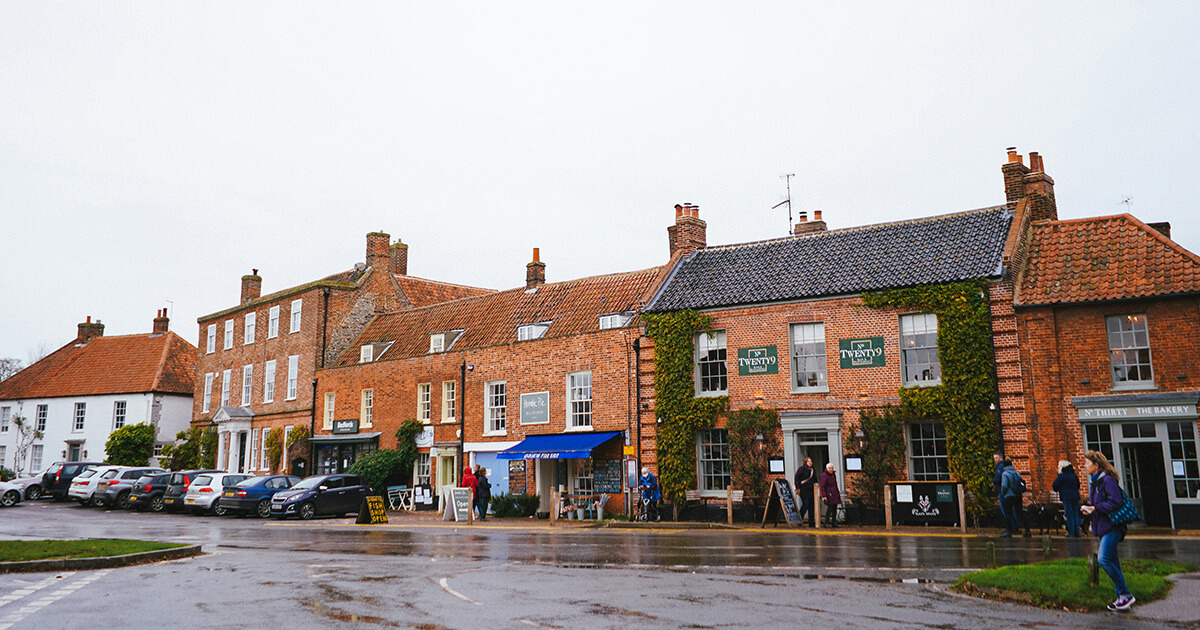
Burnham Market does not sit on a pier. It sits a little inland among the Burnhams of north Norfolk, where flint churches, a generous green, and lanes towards salt marsh and staithe explain a coastal world without always showing you the breakers. That in-between quality is exactly why it belongs in our series on historically significant sites near iconic British seaside towns. Here the sea is close enough to smell, and history arrives through market trade, naval memory, and marsh light.
A market town with room to breathe
Burnham Market takes its name seriously. The wide central green and surrounding frontages still feel designed for gathering, trading, and showing off a little Georgian confidence. Independent shops occupy buildings that have seen centuries of north Norfolk commerce - not only modern boutique calm, though that chapter is real enough.
Walk the green slowly. Notice how the space holds the village together like a public room without a roof. Market towns inland from marsh and creek needed such rooms; farmers, merchants, and coastal dealers met where carts could turn and news could travel. Burnham Market's elegance is functional history wearing good manners.
Churches of the Burnhams
The Burnhams are plural for a reason: a cluster of settlements, each with sacred landmarks. In and around Burnham Market you will find flint parish churches that repay quiet visits - towers as seamarks for travellers, interiors cool after the wind, memorials that map farming families and those lost far from Norfolk.
Church crawling here is not a dry hobby. It is how you learn the social map before the coastal path existed as a leisure brand. Step inside at least one church before you chase the famous pubs; the sequence matters for understanding what this landscape valued.
Nelson at Burnham Thorpe
A short hop away, Burnham Thorpe is forever linked with Horatio Nelson, born at the parsonage there. The village church and local memorial landscape keep his early world tangible: a Norfolk rector's son who carried marsh and North Sea weather into a naval career that changed European history.
You can feel the contrast. Quiet lanes and churchyard yews; then the knowledge that the boy from this place commanded fleets. North Norfolk's seaside identity includes that naval thread - not pirate kitsch, but professional seamanship rooted in coastal counties. Visit Burnham Thorpe as a companion to Burnham Market rather than a checkbox; the emotional temperature changes in the smaller village.
Marshes, creeks, and Burnham Overy Staithe
Follow local lanes and paths towards Burnham Overy Staithe and the marsh edge. Creeks, reedbeds, and the path to the beach open the coastal half of the Burnham story. Staithes were working interfaces between boats and wagons; today they also serve walkers and birdwatchers, but the topography still explains older labour.
On a rising tide, watch water reclaim channels. On a winter afternoon, understand why painters and writers loved this light. Burnham Market on the map is the polished village; the staithe is its salt relative. You need both.
Hoste Arms and the social stage
The Hoste Arms and neighbouring hospitality houses sit on layers of coaching and market-town social life. Inns were information exchanges as much as lodging - news from Lynn, Yarmouth, London, and the fleet. Even if you only look from the pavement, the frontage tells you Burnham Market expected visitors and conversation.
North Norfolk's later reputation for refined weekend escapes grows from that older hosting habit. Continuity can be cosy; historically it is also about who could afford to stop and who only passed through with goods.
Agriculture, flint, and the look of wealth
All around, flint walls and agricultural buildings remind you that grain, malt, and livestock underwrote coastal Norfolk. Seaside narratives sometimes pretend the coast fed itself from the sea alone. The Burnhams show the partnership: marsh and harbour for boats, hinterland for food and trade goods, market green for the deal.
Open LocoPast on the green and again at the staithe to compare inland and coastal pins. Midway through a leisurely visit, that dual scan makes the district click into place - one economy, two textures.
A day that feels like a conversation
Coffee facing the green. Church visit before the shops fully wake. Drive or cycle to Burnham Thorpe for Nelson's quieter stage, then on towards Overy Staithe for marsh air and a beach walk if tides and energy agree. Return to Burnham Market when the light softens and the green becomes a theatre of dogs, baskets, and evening talk.
Burnham Market is the elegant anteroom to an iconic British seaside coast - less postcard pier, more flint, navy memory, and salt marsh. Wherever you pause, open LocoPast to reveal historical stories pinned to your exact location. Market traders, naval families, and marsh workers all left marks on the map - often only a short lane apart.