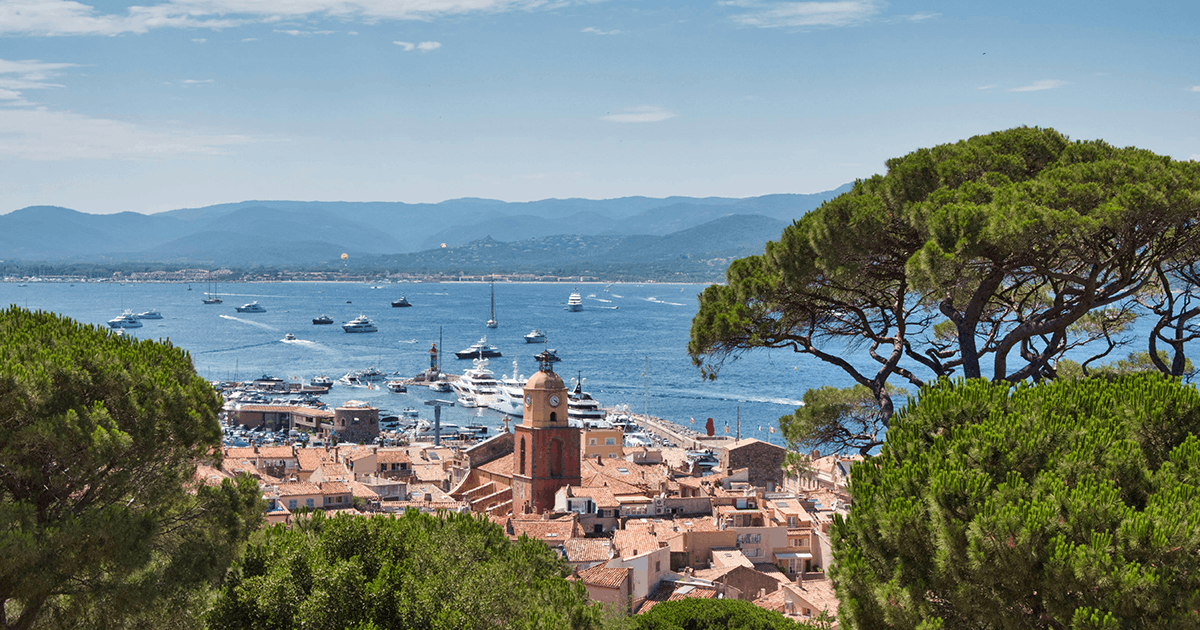
Saint-Tropez was a quiet fishing village until artists and writers discovered it in the late 19th century. Before that, pirates and navies contested its harbour; after, film stars and yachts transformed its image. Beneath the boutiques and beach clubs, the citadel, church towers, and old quarter still tell the story of a town built on the sea. This guide focuses on what survived the transformation.
The citadel and maritime museum
The Citadelle de Saint-Tropez crowns the hill above the port, built in the early 17th century to defend the coast from Spanish and Barbary raids. Thick ramparts and a dry moat encircle a keep with views across the Gulf of Saint-Tropez.
Inside, the Musée d'histoire maritime explains why this small harbour once mattered to the kings of France. Models of galleys, maps, and navigational instruments recall privateers and royal squadrons based here. Tour Suffren honours Admiral Suffren, born near Saint-Tropez, who fought across the Indian Ocean in the 18th century.
Open LocoPast on the ramparts to find stories of raids, naval sorties, and the town's military past.
Old port and La Ponche
The Vieux Port still holds fishing boats alongside luxury yachts. Pastel façades line the quays - unchanged in outline since the medieval period, even if the vessels and crowds have transformed beyond recognition.
Église Notre-Dame de l'Assomption on the harbour edge stands on a worship site used since the Middle Ages. Inside, a bust of Saint Tropez - the Roman martyr who gave the town its name - reminds visitors of roots beneath modern glamour.
La Ponche, on the eastern peninsula, is the oldest surviving neighbourhood. Tiny squares, steep lanes, and low fishermen's houses preserve a village scale the rest of Saint-Tropez has largely lost. Come early before day trippers arrive.
Maison des Têtes on Rue du Portalet - carved faces above the doorway - is a rare Renaissance domestic survivor. Chapelle de la Miséricorde served a penitents' confraternity dedicated to good works and burial of the poor.
Art, markets, and the marine cemetery
The Musée de l'Annonciade, in a 16th-century chapel near the port, holds Post-Impressionist and Fauvist works by Signac, Matisse, Derain, and others who painted here. Fishermen once prayed in the building that now displays their artistic successors.
Place des Lices - plane trees, pétanque, and market stalls on Tuesday and Saturday mornings - was laid out in the 19th century as the town outgrew its medieval core. The scene looks timeless, but the square is relatively recent.
The Cimetière marin on the coast path holds graves of sailors and fishermen facing the sea. Paul Signac chose to be buried here, linking artistic heritage to maritime life.
Coastal defences and the sentier du littoral
Above the town, the Moulins de Paon windmills once ground grain; one is restored, others stand as ruins among olive groves. Batterie de la Semaphore on the headland formed part of 19th-century defences ringed around the gulf.
The sentier du littoral from town towards Tahiti Beach passes batteries, coves, and the marine cemetery. Allow two hours for the full walk; shorter sections still reward with views unavailable from the port.
Saint-Tropez's transformation accelerated after Paul Signac sailed into the port in 1892 and invited fellow painters. The Annonciade museum preserves that moment; the citadel preserves everything that came before.
In the 1950s, Brigitte Bardot filmed And God Created Woman here, fixing Saint-Tropez in the modern imagination as a place of sun and freedom. The Place des Lices market still sells local produce beneath plane trees - a thread of ordinary life running through the glamour.
The Gulf of Saint-Tropez saw Allied landings in August 1944 during Operation Dragoon - coastal batteries and bunkers on the sentier du littoral recall a 20th-century chapter that sits alongside the 17th-century citadel above the port.
Practical tips
Begin at the citadel and maritime museum, then descend to the port and La Ponche. Place des Lices suits a market morning. Coastal path and batteries are best in late afternoon light. Parking is difficult in summer - arrive early or use the bus from Sainte-Maxime. Explore Citadelle de Saint-Tropez before the midday heat.
La Ponche and the port are best in early morning or late evening when cruise crowds thin - the scale of the old quarter is easier to feel when the lanes are quiet.
Wherever you stop, open LocoPast to reveal historical stories pinned to your exact location. Privateers, Post-Impressionists, and film legends all left marks on the map - often just streets away from the famous viewpoints.